Bootstrapping
Ideas innovation- Ideation and initiationDiverge, then converge on the problem
- Agile innovationDiverge, then converge on the solution
Could this be an IQ idea, and do we have what it needs to be a success?
Building the thing used to be the hard part. It is not any more.
Over the past year every major firm published its version of the agentic software factory. BCG Platinion, McKinsey, Deloitte and Gartner have all described the same span, and GitHub and Microsoft have shipped the tooling for it.
They begin from an intent somebody else has already validated, and they finish when the code is written and working. That end of the arc is close to solved.
The other end is not. Google's DORA research finds AI making teams faster and their systems less stable. Marty Cagan reports 89% of executives saying work got quicker, against roughly 6% who can show a return. Faster production, and no better odds of building the right thing. It has never been cheaper or quicker to get it wrong.
None of that is an accident. A software factory is paid for a working product, not a successful solution. Tell it what to build and it will build it beautifully, and whether the thing was worth building was never in its remit. That is not a criticism, it is a business model, and it is why the easy half of the arc is the half everyone is industrialising.
We do not industrialise building. We industrialise proving.
We stand shoulder to shoulder from the first signal to scale, because the thing we need to succeed is the solution, not the software.
Shared capability that individual businesses build on.
Ours runs one machine end to end, from the first demand signal through to a business standing on its own: the same route, the same gates, the same components, whatever the market.
Each initiative keeps its own name, its own market and its own leader. What it does not carry is the cost of building the apparatus underneath, because that already exists and has already been proven somewhere else.
Practical innovation, plus digital mindset, plus people power, plus collaborative communities, equals solution success.
A software factory runs spec to ship. We run signal to scale, and these five dimensions are the ground it covers. Demand and design come before anything gets built, which is exactly where the factories do not go. Design sits at the centre of all five, holding the tension between an ambitious vision and commercial pragmatism, and the four quadrants between them are shared objectives owned by the two dimensions either side.
A model of five dimensions arranged as a cross. Design sits at the centre. The vertical axis runs through Demand at the top and Deploy at the bottom, and is called customer centricity, carried by the local leaders who know the market. The horizontal axis runs through Develop on the left and Deliver on the right, and is called digital delivery, carried by the hub. Between each neighbouring pair of dimensions sits a shared objective: Solution between Develop and Demand, Market between Demand and Deliver, Success between Develop and Deploy, and Customer between Deploy and Deliver. Select any of the nine below to read what it covers.
DesignDimension
How innovative is our approach to solving the articulated problem?
The constant at the centre. Design is the focal point that manages a healthy tension between an ambitious vision and commercial pragmatism, and the thread running through all four quadrants.
Design principles · Core capabilities · Digital enablement · Innovation assessment
Three waves, two sprints each, with a go or no-go decision at every boundary. The gateway exists to fail fast, so problems are caught while they are still cheap. Agility over compliance.
The ribbon below is the shape of the work. The waves are how it is funded and proven. Each wave runs its two sprints against one phase of the ribbon.
AI writes code worth trusting only when somebody has written down what good looks like: the brief it works from, the tests it has to pass, the review at the end. That written-down standard is the harness, and it is the reason generated code can be relied on at all. Every harness on the market stops at the code.
Our gate questions are the same kind of thing, written down so a machine can act on them, but covering what is worth building rather than how it gets built. That is what lets us point AI at the front of the arc and get back something other than confident nonsense.
Could this be an IQ idea, and do we have what it needs to be a success?
How resilient is the solution, and what does a demonstrator need to prove to the market?
How do we take the best version of this to the greatest number of users?
A mature hub should hand over roughly 90% of what a new initiative needs, already proven. Configured, not custom. That is the target we are building towards, not an average we have hit.
The core team that deploys resource, applies the process and allocates funding and support to an initiative's leadership.
An ecosystem of internal and external technology to take a digital product from inception to implementation.
Senior sector and initiative people, and the tools to accelerate design and development.
Motivated leaders with deep market experience and the relationships to navigate complex commercial ground.
Every initiative starts with a practical problem, with clear market demand, aligned to a strategy of positive impact.
A component in the hub is not a unit of code, it is a unit of proof. It carries the record of what it has survived. Generating code is now close to free. Proving it deserves to exist is not.
And proving is not something that happens once. Every improvement any initiative makes to a shared component is inherited by all of them, so what a new initiative starts with is not a snapshot of what worked two years ago but a set of enablers that is still improving. Move quickly, act confidently, update collectively. That is how a portfolio keeps pace with a market that will not sit still.
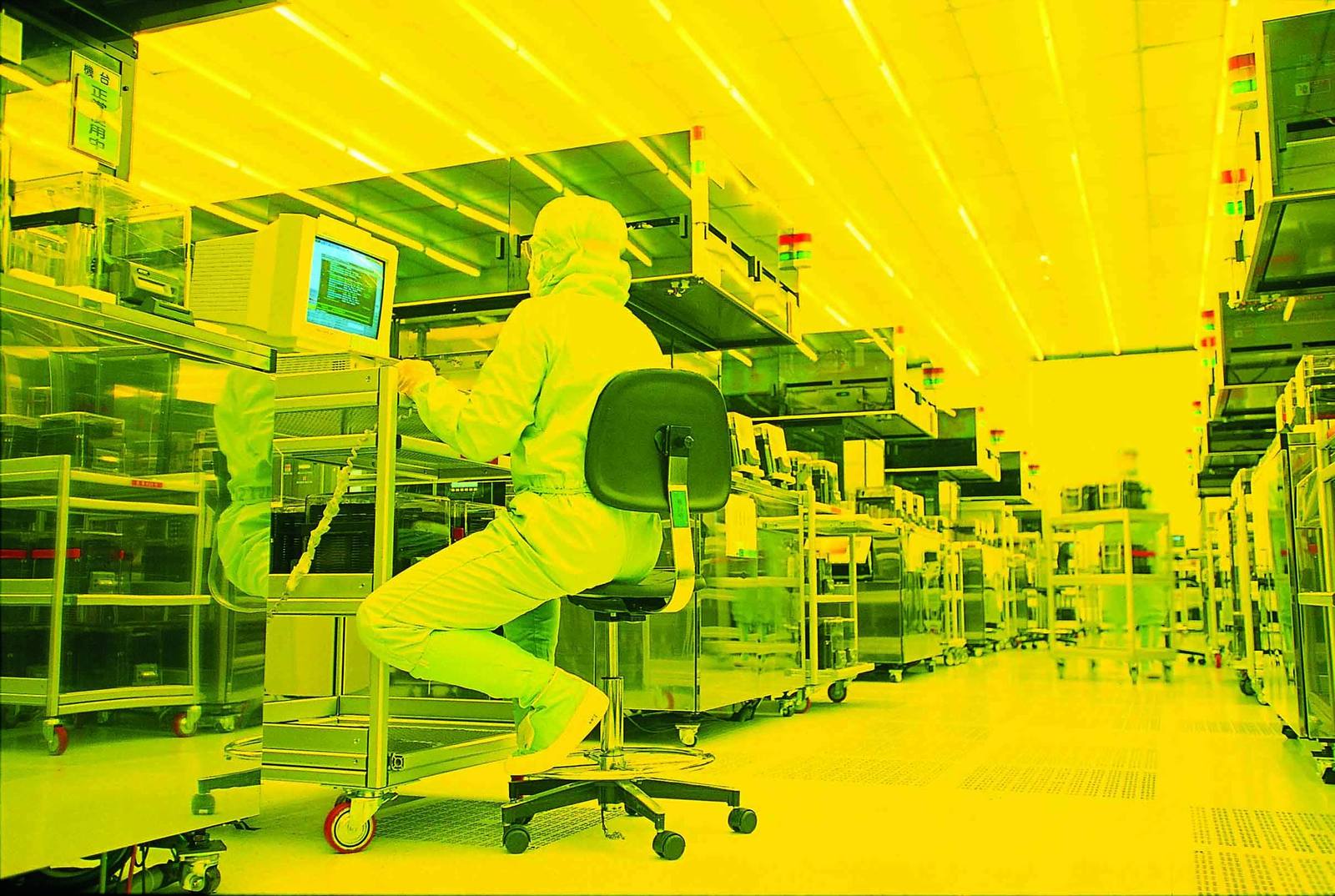
A chip factory costs billions, so chip designers used to have to be enormous. Then TSMC built the factory and sold access to it, and a company with a good design and no factory of its own could suddenly compete with anybody. The design houses brought the idea, the brand and the customer. TSMC brought everything else.
That is our shape. Each initiative brings the market knowledge, the relationships and the customer. The hub brings the rest, already proven. And every initiative that clears its gates leaves something behind, so the next one starts further along than the last.
Which means the thing worth keeping is not the code. It is the specification, and the proof that it works.
A method is only worth something in the hands of somebody who knows the market. Partners, investors and everyday entrepreneurs with the energy to lead change.